
As I crack the eggs and whisk them into the milk, I can already feel the anticipation building for this delightful morning treat. German pancakes, or Dutch baby pancakes as they’re often called, promise a fluffy and custardy bite that feels like a warm hug from the oven. What’s more, this baked wonder requires minimal effort, making it an ideal option for those busy mornings when time is short but flavor is a must. Pair these soft pancakes with a dusting of powdered sugar and a drizzle of maple syrup or a selection of fresh berries, and you’ll discover a breakfast that transforms the everyday into something extraordinary. Curious about how to make your mornings more memorable? Let’s dive into the deliciousness of these German pancakes!
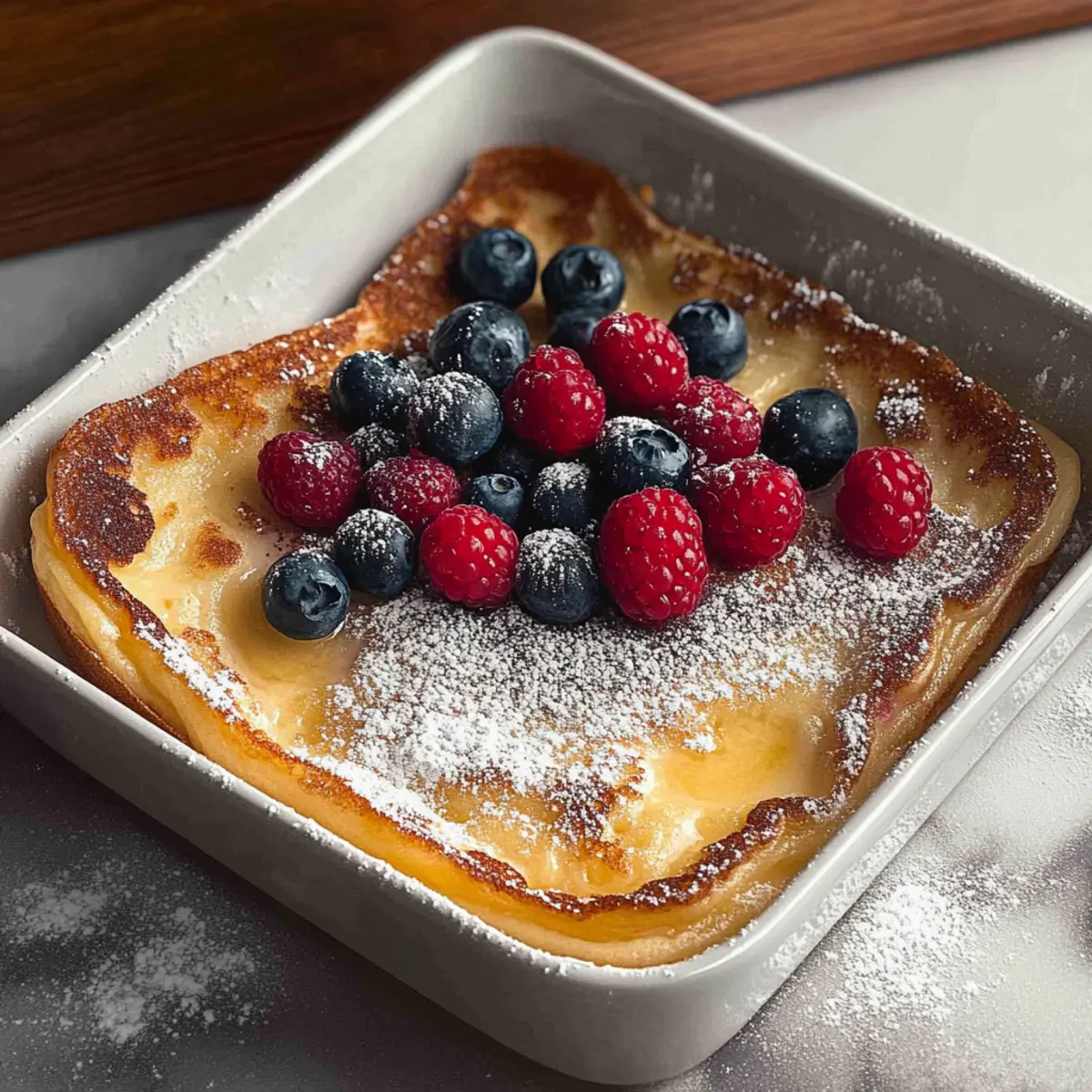
Why are German Pancakes a Game Changer?
Simplicity: With just a handful of ingredients and minimal prep, these pancakes come together effortlessly, making them perfect for anyone, even those new to cooking.
Decadent Texture: Expect a delightful custardy center with crispy edges that will impress your family or guests—it’s a dish that’s sure to be a conversation starter!
Versatile Toppings: Whether you choose fresh berries, maple syrup, or a sprinkle of powdered sugar, you can easily customize these pancakes to suit every taste preference.
Time-Saving: In just about 30 minutes, you can whip up a hearty breakfast that feels indulgent but requires little effort, leaving you time to enjoy your morning.
Crowd Pleaser: Perfect for brunch gatherings, these German pancakes are sure to delight everyone at the table. Looking for more breakfast ideas? Check out these delightful Wheat Pumpkin Pancakes for some pumpkin-spiced goodness!
German Pancake Ingredients
For the Batter
- Whole Milk – Adds moisture and richness; feel free to use 2% for a lighter option.
- All-Purpose Flour – Provides structure; gluten-free flour is a great substitute for those avoiding gluten.
- Large Eggs – Essential for proper puffiness and a custardy texture; don’t skip these!
- Granulated Sugar – Sweetens the batter; brown sugar can add a delightful depth of flavor.
- Pure Vanilla Extract – Enhances the overall flavor; almond extract offers a unique twist.
- Salt – Boosts flavor; sea salt or kosher salt will work well.
- Unsalted Butter – Adds richness and helps achieve a lovely golden brown color; margarine or plant-based butter are suitable alternatives.
Optional Toppings
- Confectioners Sugar – A lovely dusting to finish off your pancakes.
- Maple Syrup – A classic choice to complement the pancakes’ fluffiness.
- Fresh Berries – Adds a vibrant, fresh flavor; any seasonal fruit can be used as a topping.
Embrace the joy of homemade German pancakes; the perfect breakfast treat awaits you!
Step‑by‑Step Instructions for Soft and Eggy Baked German Pancakes
Step 1: Preheat the Oven
Begin by preheating your oven to 425°F (218°C). This high temperature ensures your German pancakes get that signature puffiness. While the oven warms, gather your ingredients for a smoother cooking experience.
Step 2: Blend the Batter
In a blender, combine whole milk, all-purpose flour, large eggs, granulated sugar, pure vanilla extract, and salt. Blend until the mixture is smooth and creamy, about 30–45 seconds. The batter should be free of lumps, creating a velvety texture that will result in fluffy German pancakes.
Step 3: Melt the Butter
Place sliced unsalted butter in a 9×13-inch baking dish and slide it into the preheated oven for 2–3 minutes. Keep an eye on it, as the butter should melt completely without browning. This melted buttery goodness will help create a wonderfully crispy edge and add richness to the pancake.
Step 4: Coat the Pan
Once the butter is fully melted, carefully swirl it around the bottom of the baking dish to evenly coat the surface. This not only prevents sticking but also enhances browning. It should shimmer and have a lovely golden hue when you’re done.
Step 5: Pour the Batter
With the butter still hot, pour the blended batter into the pan. Be cautious to avoid splatters, as the hot butter can cause a bit of a sizzle. The batter should create gentle ripples in the melted butter, signaling it’s ready to bake.
Step 6: Bake the Pancakes
Place the baking dish back in the oven and bake for 22–27 minutes. Watch as the pancakes puff up dramatically and turn a beautiful golden brown on the edges. They are done when they are airy and slightly firm to the touch, with no liquid batter remaining.
Step 7: Cool Before Slicing
Once baked, carefully remove the dish from the oven and let the German pancakes cool for 10–15 minutes. This allows them to settle slightly; don’t worry if they deflate a bit—this is normal!
Step 8: Serve and Enjoy
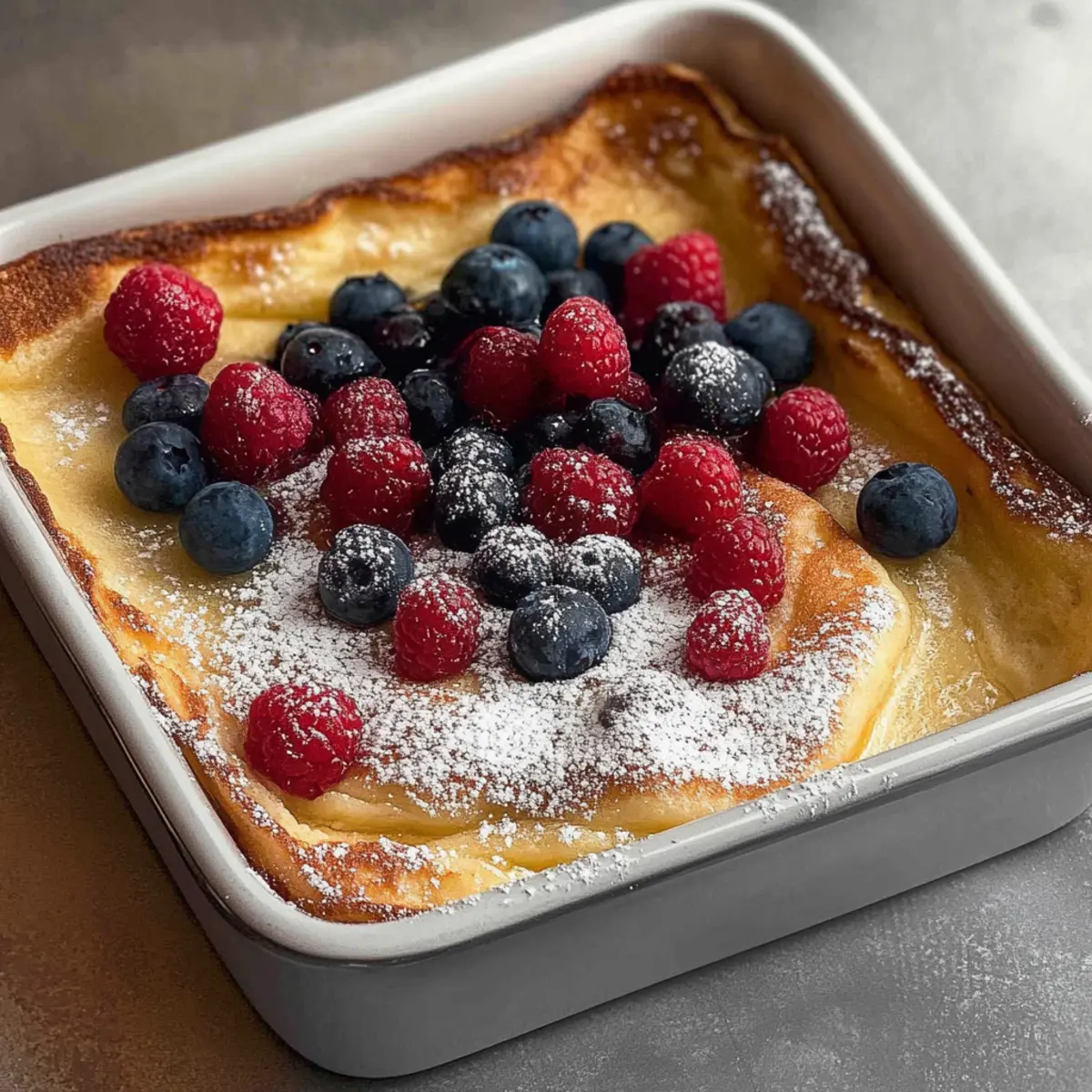
Slice the pancakes into squares and serve warm. Dust with confectioners sugar, drizzle with maple syrup, or top with fresh berries for a delightful finishing touch. Each bite of these soft and eggy German pancakes promises to make your morning extraordinary!
Make Ahead Options
These German pancakes are fantastic for meal prep, allowing you to start your morning with ease! You can prepare the batter up to 24 hours in advance; simply blend the ingredients and store it in the refrigerator. Additionally, you can melt the butter in the baking dish and refrigerate it until you’re ready to bake. When you’re set to serve, preheat the oven, swirl the chilled butter, pour in the batter, and bake as instructed. This ensures your pancakes remain fluffy and delicious, just like fresh out of the oven. Enjoy a stress-free breakfast that’s equally scrumptious and satisfying!
German Pancakes: Customization Ideas
Feel free to get creative with your German pancakes and elevate your breakfast experience with these delightful variations!
-
Gluten-Free: Substitute all-purpose flour with gluten-free flour blend for a delightful gluten-free breakfast.
-
Dairy-Free: Swap whole milk for almond milk or oat milk to make this recipe suitable for a dairy-free diet.
-
Spiced Delight: Add a teaspoon of cinnamon or nutmeg to the batter for a warm, inviting spice flavor that’s perfect for cozy mornings.
-
Citrus Burst: Incorporate a tablespoon of lemon zest into the batter for a refreshing citrus note that brightens up each bite.
-
Savory Twist: Mix in some shredded cheese or fresh herbs like chives for a savory version that balances the pancake’s sweetness.
-
Berry Bliss: Top with mixed berries or poached fruit to add a burst of freshness; whipped cream can elevate this topping into a decadent treat.
-
Caramelized Bananas: Sauté sliced bananas with a little brown sugar before topping your pancakes for a wonderful caramelized flavor.
-
Nutty Goodness: Drizzle with almond or hazelnut syrup for a nutty twist that pairs beautifully with the fluffy texture.
If you’re looking for more ways to enjoy breakfast, don’t forget to explore these delightful Wheat Pumpkin Pancakes for a seasonal spin!
Expert Tips for German Pancakes
Melted Butter Method: Ensure that the butter is fully melted before pouring in the batter; this helps create a crispy edge and prevents sticking.
Avoid Overmixing: Blend the ingredients just until smooth; overmixing can lead to dense pancakes instead of the desired light and fluffy texture.
Temperature Check: Always use an oven thermometer to confirm that your oven reaches and maintains the correct 425°F (218°C), ensuring the perfect puffiness for your German pancakes.
Serving Fresh: Serve your pancakes immediately after baking to experience their delightful puffiness; they can deflate quickly if left too long.
Storage Care: If making ahead, store leftovers tightly wrapped in plastic wrap in the fridge for up to 3 days. They can be reheated but may lose some fluffiness.
Storage Tips for German Pancakes
Fridge: Once cooled, wrap your German pancakes tightly in plastic wrap and store them in the fridge for up to 3 days. They’ll still be delicious for a quick breakfast!
Freezer: For long-term storage, slice the cooled pancakes and wrap each piece individually in plastic wrap or aluminum foil before placing them in a freezer-safe bag. They can be frozen for 2-3 months.
Reheating: To reheat, place the pancakes in a preheated oven at 350°F (175°C) for about 10-15 minutes, until warm and slightly puffed again. You can also microwave them for 30-45 seconds, but they may lose some of their fluffiness.
Tips: Always check for any signs of freezer burn before using frozen pancakes, and feel free to top them with powdered sugar or syrup after reheating for an extra special touch!
What to Serve with Soft and Eggy Baked German Pancakes
Enhance your breakfast experience with delightful sides and toppings that perfectly complement the fluffy texture of German pancakes.
- Crispy Bacon: The saltiness of crispy bacon provides a savory balance to the sweet, custardy pancakes, making each bite more satisfying.
- Fresh Berries: Bursting with flavor and vibrant color, fresh berries add a refreshing element that pairs beautifully with the soft pancakes.
- Maple Syrup: A classic pairing that enhances the sweetness and richness, maple syrup drizzled over the pancakes creates a comforting experience.
- Greek Yogurt: For a creamy and tangy contrast, serving a dollop of Greek yogurt on the side adds a delightful creaminess and extra protein.
- Whipped Cream: Light and airy whipped cream brings a touch of indulgence, making your pancake experience feel like a special treat.
- Sliced Bananas: Sweet, soft bananas add a lovely texture and natural sweetness that pairs harmoniously with the pancakes.
- Almonds or Pecans: Chopped nuts add a satisfying crunch, offering a delightful contrast to the softness of the pancakes while also introducing rich, nutty flavors.
- Herbal Tea or Fresh Orange Juice: A warm cup of herbal tea or a glass of fresh orange juice provides a refreshing drink option that lightens up the meal.
German Pancakes Recipe FAQs
What type of milk is best for German pancakes?
Whole milk adds moisture and richness to the batter, contributing to that delightful custardy texture. However, if you’re looking for something lighter, feel free to substitute with 2% milk without sacrificing too much flavor.
How should I store leftover German pancakes?
Once cooled, wrap your German pancakes tightly in plastic wrap and store them in the fridge for up to 3 days. For longer storage, slice the pancakes, wrap each piece individually, and place them in a freezer-safe bag. They can be kept in the freezer for 2-3 months, ready for a quick reheat whenever you’re in the mood for a comforting breakfast!
Can I freeze German pancakes? If so, how?
Absolutely! Freezing German pancakes is a great way to have delicious breakfast treats on hand. After they’ve cooled, slice the pancakes and wrap each piece individually in plastic wrap or aluminum foil. Then, place them in a freezer-safe bag. To reheat, simply pop them in a preheated oven at 350°F (175°C) for about 10-15 minutes or microwave them for 30-45 seconds. Beware, microwaving might cause them to lose a bit of that fluffiness!
What if my batter is lumpy?
If your batter ends up lumpy, don’t worry! This can happen if it’s blended too lightly or the flour clumps together. To fix it, just give it a bit more mixing in the blender or use a whisk to break up those lumps before pouring it into the buttered baking dish. Just make sure not to overmix, as that could lead to denser pancakes!
Are there any dietary considerations for German pancakes?
Yes! For those avoiding gluten, gluten-free flour is an excellent alternative and works just as wonderfully in this recipe. Additionally, if you have any allergies to dairy or eggs, you might try using a non-dairy milk alternative and egg substitutes like flaxseed meal combined with water, though I find the texture may differ slightly. Always check ingredient labels to suit your dietary needs!
Why do my German pancakes deflate after baking?
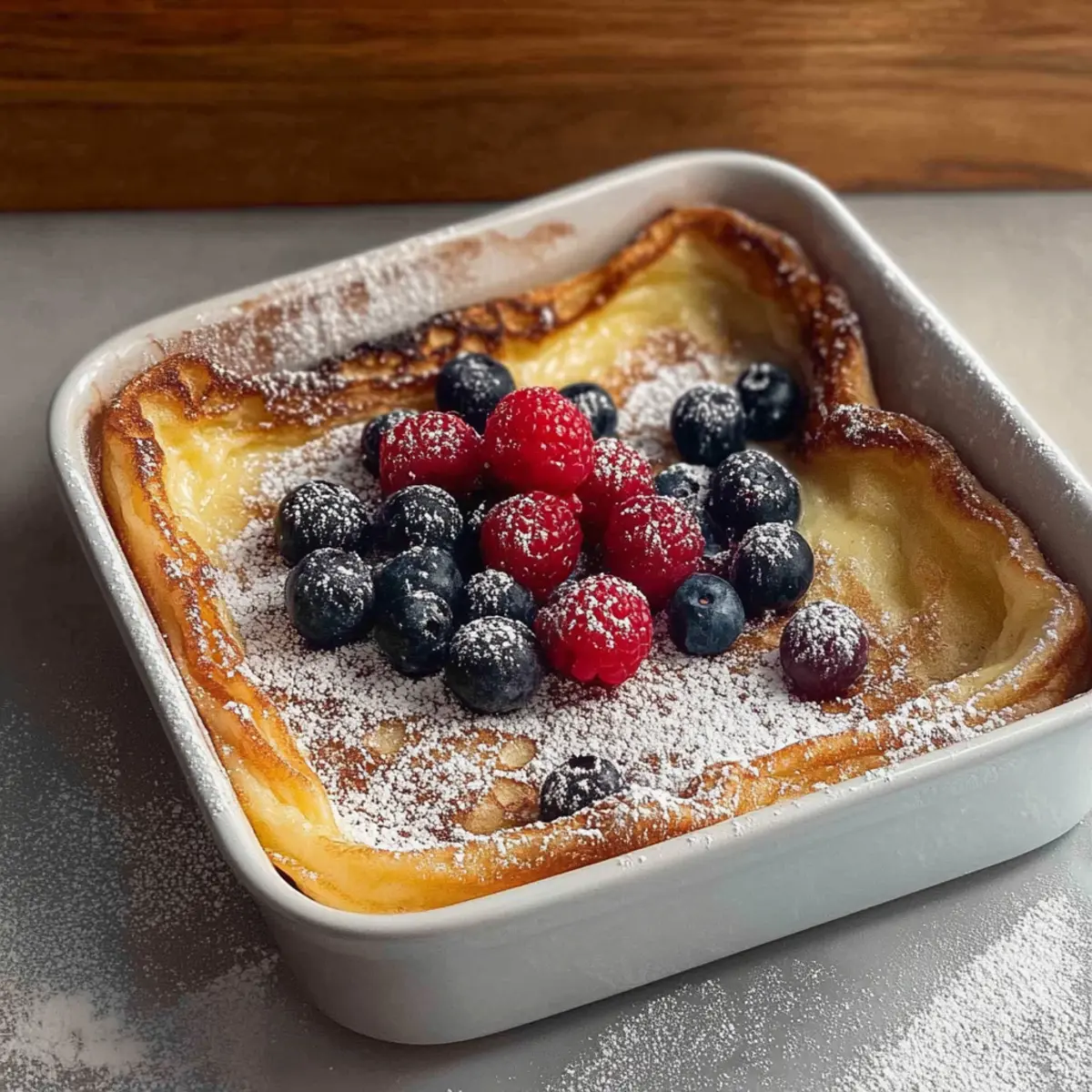
It’s perfectly normal for your German pancakes to deflate a bit once removed from the oven. The dramatic puffiness you see while baking is a result of steam, and as it escapes, the pancakes settle down. The key is to enjoy them fresh out of the oven for that delightful airy texture!
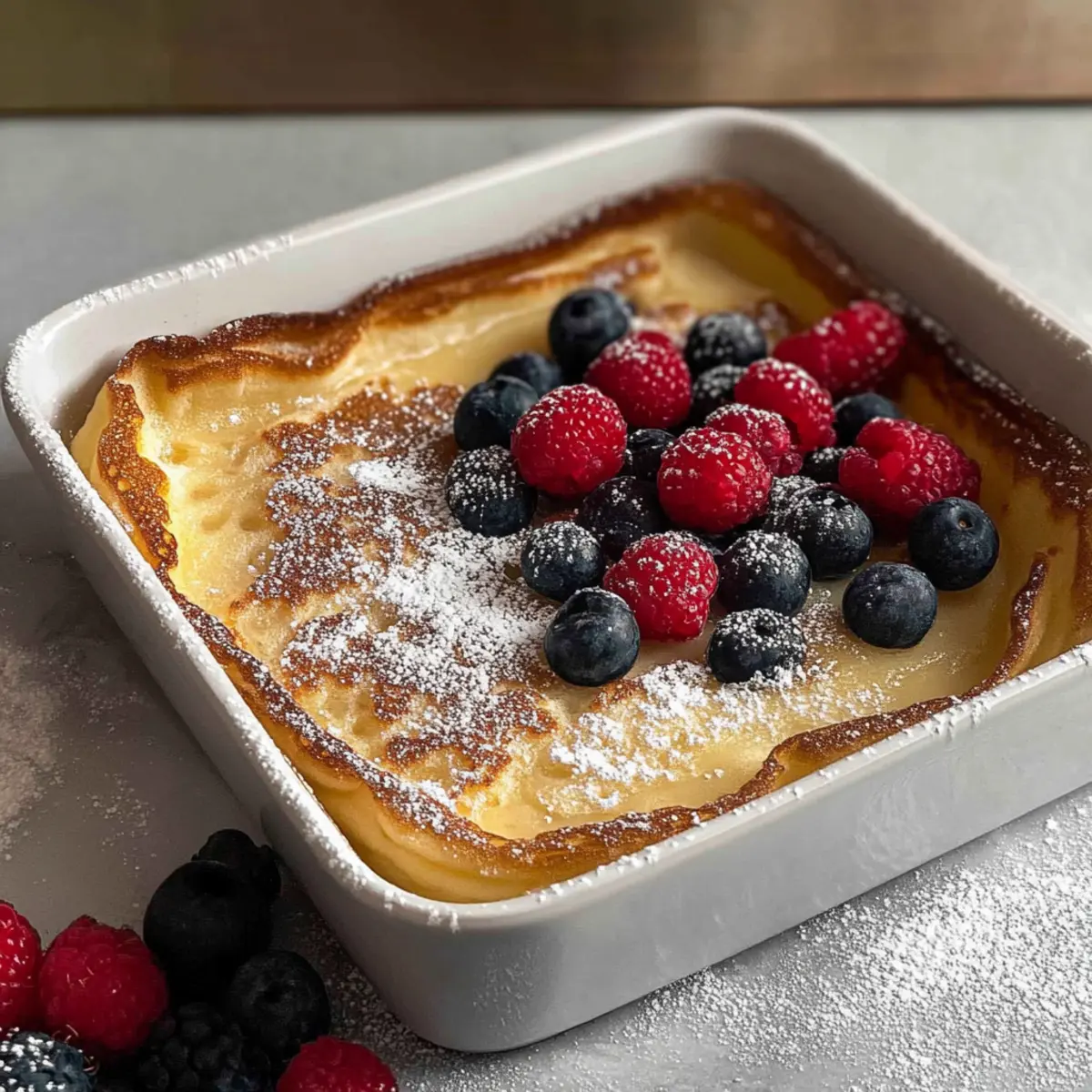
Fluffy German Pancakes: Your New Favorite Breakfast Delight
Ingredients
Equipment
Method
- Preheat your oven to 425°F (218°C).
- Blend the milk, flour, eggs, sugar, vanilla extract, and salt until smooth.
- Melt the butter in the baking dish in the oven for 2–3 minutes.
- Swirl the melted butter to coat the dish evenly.
- Pour the batter into the pan over the hot butter.
- Bake for 22–27 minutes until puffed and golden brown.
- Cool for 10–15 minutes before slicing.
- Serve warm with toppings of your choice.
Leave a Reply