
As the chill of winter wraps around us, I find comfort in the warmth of a delicious bowl of Tasty Korean Winter Soup. This cozy dish combines tender beef short ribs, soft tofu, and a medley of hearty vegetables, simmered gently in a rich, savory broth that simply beckons those cold nights. It’s the ideal antidote to fast food, showcasing how wholesome ingredients can effortlessly come together to nourish both body and soul. Not only does this recipe bring a delightful twist to your dinner routine, but it’s also adaptable—whether you’re looking for a gluten-free option or a vegetarian variation, there’s a way to make it work for you. Are you ready to dive into a bowl of pure comfort? Let’s get cooking!

Why is Korean Winter Soup so Comforting?
Heartwarming Recipe: This Tasty Korean Winter Soup is a hug in a bowl, perfect for chilly nights when you crave something nourishing and cozy.
Rich, Flavorful Broth: With tender beef short ribs and soft tofu, this dish brings depth and satisfaction to every spoonful.
Versatile Ingredients: Feel free to substitute ingredients! Use portobello mushrooms for a vegetarian option or opt for gluten-free soy sauce to cater to your dietary needs.
Ease of Preparation: The steps are uncomplicated, allowing you to create a homemade meal with minimal effort, perfect for busy weeknights or leisurely weekends.
Impressive Crowd-Pleaser: Serve this soup at your next gathering, and watch your guests fall in love with its rich flavors and comforting warmth. Pair it with sides like rice or a fresh salad for a complete meal, just like a cozy Korean feast! 🌿🥢
Tasty Korean Winter Soup Ingredients
For the Broth
- Beef Short Ribs – Provides rich flavor and tender texture; can substitute with beef shank or oxtail for a unique twist.
- Korean Leeks – Contributes aromatic flavor; substitute with regular leeks or a mix of green onions and chives if needed.
- Guk Ganjang (Korean soup soy sauce) – Enhances the depth of the broth; for gluten-free, use tamari instead.
For the Soup
- Tofu – Adds protein and creaminess; works well with the broth, absorbing flavors beautifully.
- Radish – Adds earthiness and a slight crunch; integral for the flavor layering of this tasty Korean winter soup.
- Aromatics (Onion, Ginger, Garlic, Green Onions) – Provides foundational flavors to the broth, boosting aroma and taste.
For Serving
- Freshly Sliced Green Onions – A flavorful garnish that brightens each bowl; gives a fresh finish.
- Black Pepper – A sprinkle adds warmth and depth; adjust to your taste preference.
- Steamed Rice – A perfect side for a complete meal, pairing wonderfully with the soup.
Step‑by‑Step Instructions for Tasty Korean Winter Soup
Step 1: Soak the Ribs
Begin by soaking the beef short ribs in cold water for 1 hour. This crucial step removes any excess blood, ensuring a clear and rich broth for the Tasty Korean Winter Soup. Check the water occasionally, and feel free to change it if it appears cloudy.
Step 2: Prepare the Aromatics
While the ribs are soaking, prepare your aromatics. Peel and leave the whole yellow onion skin on for added flavor; slice the ginger, and chop the garlic. Trim the green onions, separating the white parts for simmering and reserving the green tops for garnishing. This preparation will enhance the depth of flavor in your soup.
Step 3: Combine Ingredients in the Pot
In a large pot, combine the soaked short ribs, prepared ginger, white parts of green onions, and the whole onion with approximately 10 cups of water. Ensure the ribs are submerged, which is vital for an even simmer. This mixture forms the flavorful base of your Tasty Korean Winter Soup.
Step 4: Bring to a Boil
Place the pot over medium-high heat, bringing the mixture to a gentle boil. As it heats, carefully skim off any brown foam that rises to the surface; this keeps your broth clean and appetizing. This step typically takes about 10–15 minutes.
Step 5: Simmer the Broth
Once boiling, reduce the heat to low and let the soup simmer uncovered for 1 hour. During this time, keep an eye on the surface and continue to skim as necessary. This gentle simmer develops the rich, savory essence of the broth, which is the star of your Tasty Korean Winter Soup.
Step 6: Add Radish and Simmer Further
After 1 hour, add the sliced radish to the pot, stirring gently. Allow the soup to continue simmering for an additional 20 minutes or until the radish is tender. The radish adds a wonderful earthiness, melding beautifully with the flavors from the broth.
Step 7: Season the Broth
Once the radish is tender, discard the solid aromatics from the broth, leaving a clear, flavorful soup. In this next step, season the broth with guk ganjang, sea salt, and additional chopped garlic to taste. Let it simmer for another 10 minutes, allowing the flavors to meld perfectly in your Tasty Korean Winter Soup.
Step 8: Serve and Garnish
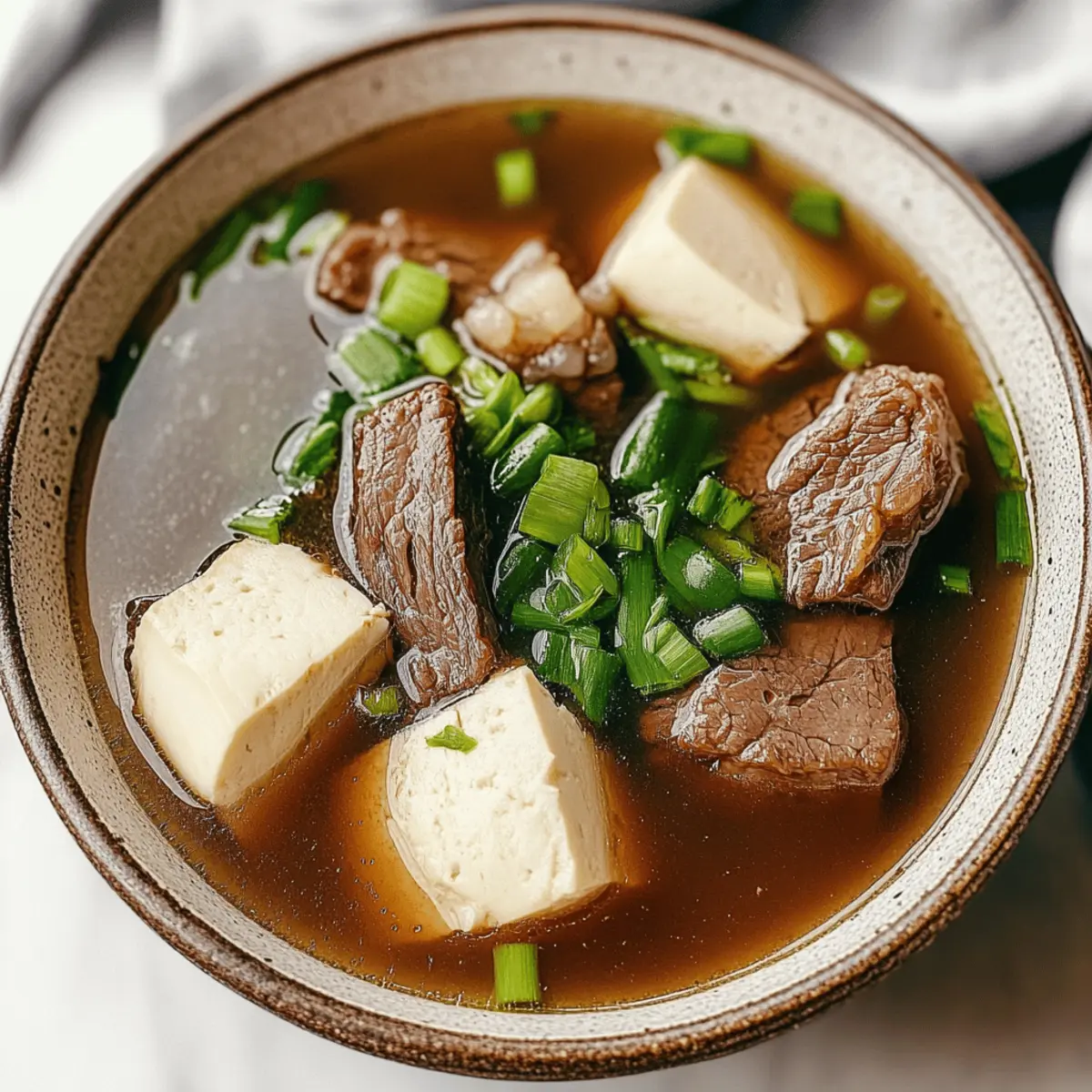
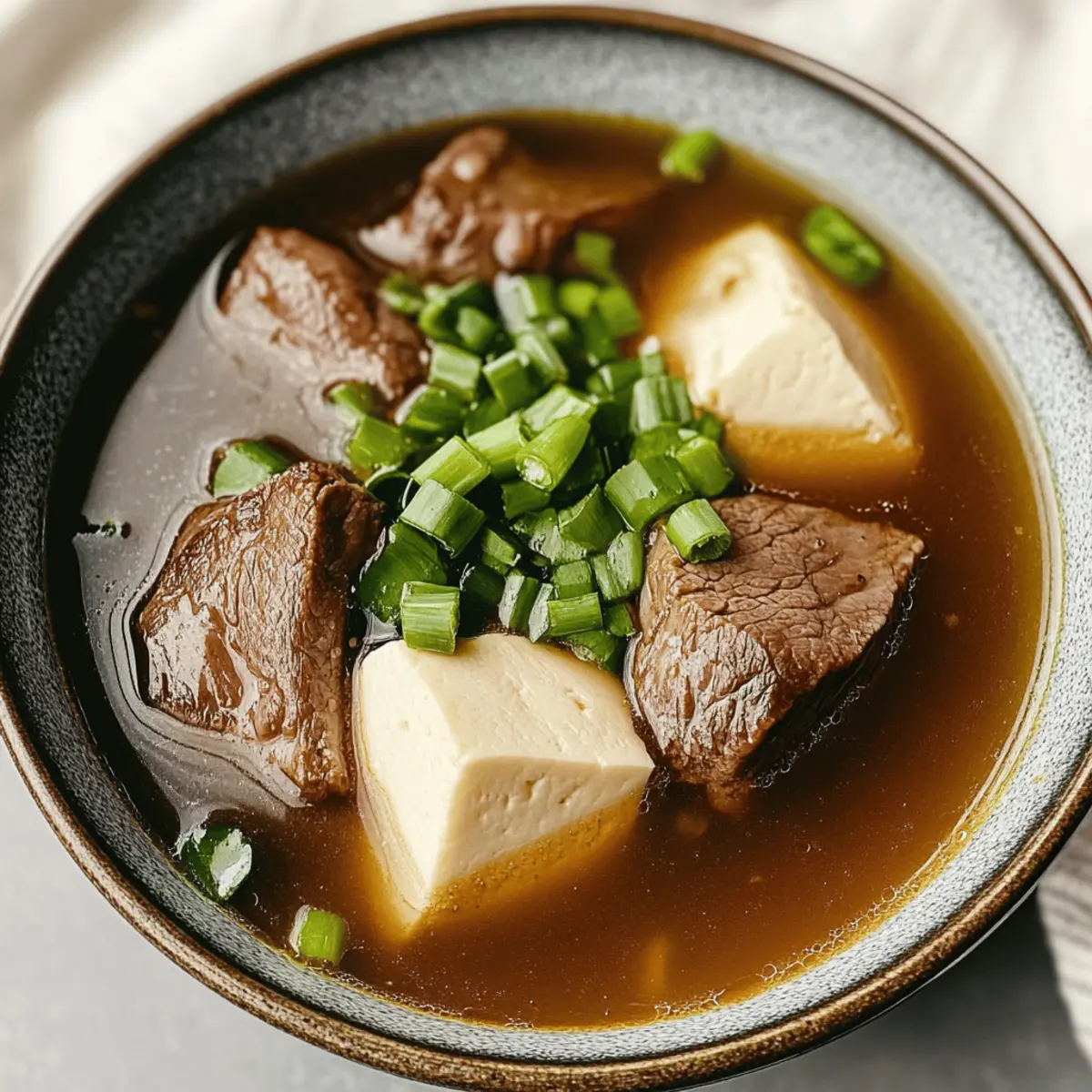
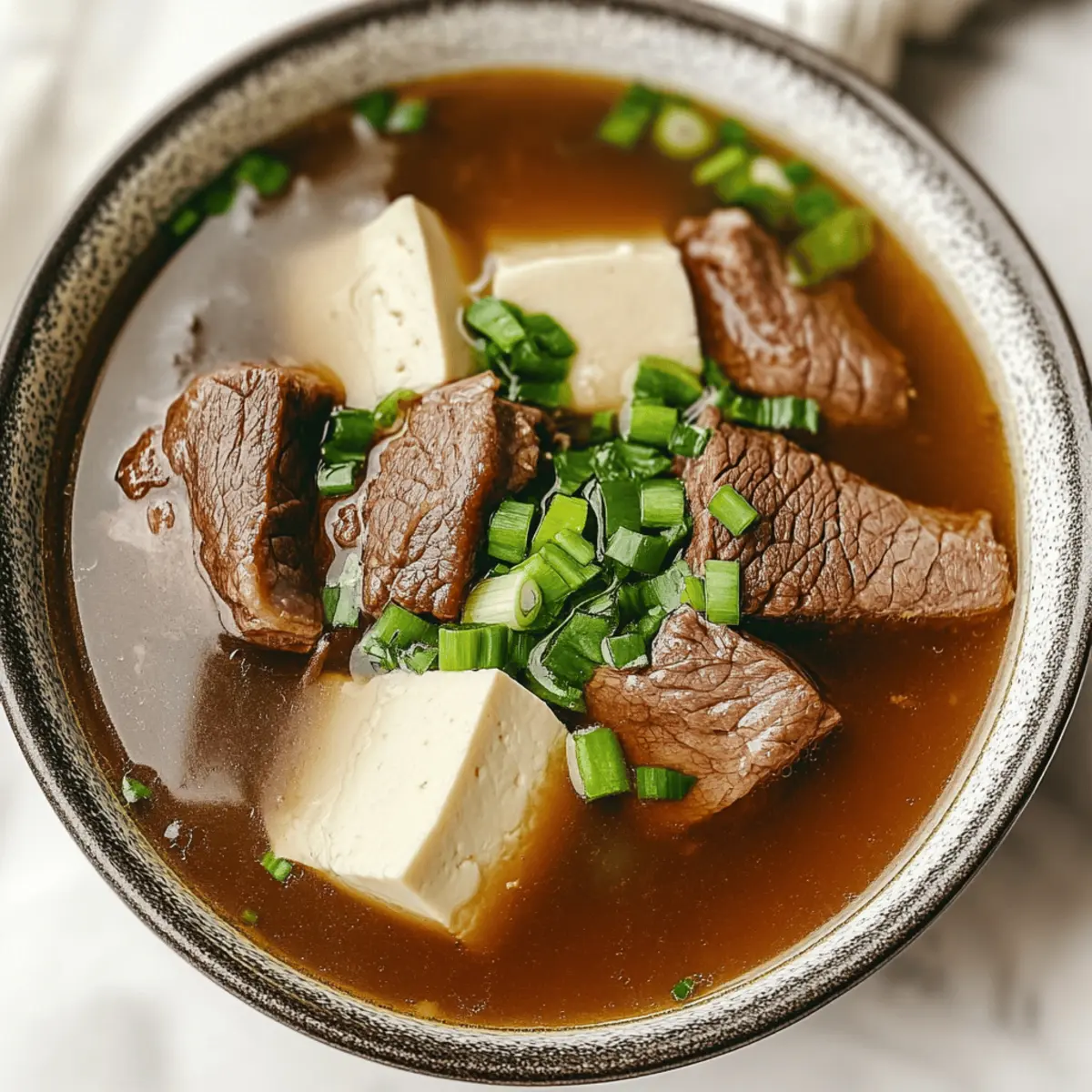
Finally, ladle the hearty soup into bowls, making sure each serving has both beef and tofu. Garnish with freshly sliced green tops of green onions and a sprinkle of black pepper to enhance the flavor. Serve hot alongside steamed rice for a complete meal that warms the soul on chilly days.
How to Store and Freeze Tasty Korean Winter Soup
Fridge: Store any leftovers in an airtight container for up to 3 days. Ensure the soup cools completely before sealing to maintain freshness.
Freezer: For longer storage, freeze the soup in portions for up to 3 months. Let it cool before transferring to freezer-safe containers or bags, eliminating excess air.
Reheating: When ready to enjoy, thaw in the fridge overnight and gently reheat on the stove over medium heat, stirring occasionally until warmed through.
Serving Tip: Garnish with fresh green onions and a sprinkle of black pepper after reheating to refresh the flavors of the Tasty Korean Winter Soup.
Make Ahead Options
These delicious Tasty Korean Winter Soup options are perfect for busy home cooks looking to save time during hectic weeknights! You can prepare the broth base, including the soaked beef short ribs and aromatics, up to 24 hours in advance by refrigerating it in an airtight container. Additionally, the radishes can be sliced and stored separately for up to 3 days. To maintain quality, avoid adding the soy sauce or seasonings until just before serving, as it allows the flavors to develop while keeping the broth fresh. When you’re ready to enjoy, simply simmer everything together, adding any final seasonings, and you’ll have a comforting bowl of Tasty Korean Winter Soup ready to warm your soul!
Tasty Korean Winter Soup Variations
Feel free to explore these delicious twists to make your Tasty Korean Winter Soup uniquely yours!
-
Vegetarian Delight: Replace beef with portobello mushrooms or seitan for a hearty, plant-based version. This substitution adds a rich, umami flavor while keeping the comforting essence intact.
-
Gluten-Free Adjustments: Use tamari in place of guk ganjang to ensure gluten-free goodness in every bowl. You won’t sacrifice flavor, and everyone can enjoy this comforting classic!
-
Root Vegetable Medley: Incorporate additional root veggies like carrots or sweet potatoes to enhance sweetness and texture. Their natural sweetness pairs wonderfully with the savory broth, creating a delightful surprise in each bite.
-
Spicy Kick: Add a splash of gochujang or a pinch of red pepper flakes for a spicy twist that warms you from the inside out. Feel free to customize the heat level according to your family’s preference.
-
Crispy Tofu: For a contrasting texture, use pan-fried tofu instead of soft tofu. This adds a delightful crunch while soaking up all the flavorful broth for a satisfying experience.
-
Herb-Infused: Experiment with fresh herbs like cilantro or Thai basil as a garnish for an aromatic layer that brings freshness to each serving. An unexpected twist that brightens the heartwarming soup!
-
Seafood Twist: Substitute beef with shrimp or fish fillets for a delightful take on this classic soup. These proteins cook quickly and add a lovely brininess to the broth that is simply irresistible.
-
Mushroom Medley: Mix different types of mushrooms for a depth of flavor and a textural delight. Shiitake and enoki mushrooms, for example, will add variety and a gourmet touch to your comforting bowl.
Whether you’re stirring up a cozy night in or impressing friends at a gathering, these variations are sure to delight! Looking for an alternative cozy dish? Don’t miss out on our Mushroom Soup Cozy or an exciting Korean Ground Beef option for dinner. Enjoy!
What to Serve with Tasty Korean Winter Soup
Pairing this soul-soothing soup with the perfect sides will elevate your dining experience beyond imagination.
-
Steamed Rice: A classic companion that absorbs the rich broth, creating a comforting meal that warms you from the inside out. Paired together, the textures harmonize beautifully, inviting every spoonful to be savored.
-
Korean Pancakes (Pajeon): Light and crispy, these savory pancakes offer a delightful contrast to the broth’s warmth while adding a burst of flavor. Perfect for sharing, they create a festive atmosphere around your dining table.
-
Pickled Vegetables: The tangy crunch of kimchi or pickled radishes balances the richness of the soup, awakening your palate with vibrant flavors. They provide a refreshing contrast that brightens each bite.
-
Asian Salad: A fresh medley of greens with sesame dressing adds a crisp and light element. Toss in some carrots and cucumbers for extra crunch, making this an invigorating addition to your winter meal.
-
Savory Steamed Buns (Pork or Vegetable): Soft and fluffy, these buns create a satisfying bite when dipped into the flavorful broth, enhancing the overall experience. Their pillowy texture is the perfect complement.
-
Chilled Soju or Rice Wine: A small glass of this smooth drink pairs wonderfully, enhancing the rich flavors of the soup. It’s a popular choice to unwind, making your meal feel even more special.
-
Fruit Sorbet for Dessert: A light and refreshing sorbet cleanses the palate after the hearty soup, leaving you feeling satisfied yet not overly full. It’s a sweet finale to your comforting meal.
Expert Tips for Tasty Korean Winter Soup
-
Soak the Ribs: Soaking beef short ribs for 1 hour removes excess blood and ensures a clearer, richer broth for your Tasty Korean Winter Soup.
-
Skim Regularly: Continuously skim off any foam while simmering. This simple step keeps your broth clean and enhances the dish’s overall aesthetic.
-
Adjust Gradually: When seasoning, especially with alternative soy sauces, add in small increments to prevent over-salting, ensuring balanced flavors in your soup.
-
Radish Variation: Experiment with different types of radishes or even add carrots for a unique twist, enhancing both the flavor and visual appeal of your Tasty Korean Winter Soup.
-
Make It Ahead: This soup pairs beautifully with rice, making it perfect for meal prep; simply store leftovers in airtight containers and enjoy them within three days.
Tasty Korean Winter Soup Recipe FAQs
What type of beef is best for Korean winter soup?
For the best flavor and tenderness, I recommend using beef short ribs. If you’re looking for alternatives, beef shank or oxtail can also work well. Just ensure the cuts are well-marbled for that rich, comforting taste.
How do I know when my ingredients are ripe or fresh?
Choose beef with a bright red color and marbling. For tofu, look for a firm texture without dark spots. When picking radishes, select those that are firm and smooth without any wrinkles or soft spots, as they indicate freshness.
How should I store leftovers of this tasty Korean winter soup?
Store leftovers in an airtight container in the fridge for up to 3 days. Be sure the soup cools down completely before sealing to maintain its warmth and richness. When ready to enjoy, gently reheat on the stove over medium heat.
Can I freeze Korean winter soup for later use?
Absolutely! You can freeze the soup in portions for up to 3 months. Make sure it cools completely, then transfer to freezer-safe containers or bags, removing as much excess air as possible. To reheat, thaw in the fridge overnight and warm up over the stove, stirring occasionally.
What should I do if my broth turns cloudy?
If your broth turns cloudy, it typically means you’ve stirred up impurities or not skimmed enough foam during cooking. To prevent this, be diligent about skimming off the brown foam during the simmering process. If the broth is already cloudy, try straining it through a fine mesh sieve for clarity.
Are there any dietary considerations?
Yes! For gluten-free options, substitute guk ganjang with tamari. If you’re serving this soup to someone with allergies, make sure to double-check the soy sauce and any packaged ingredients for hidden allergens. For a vegetarian variation, replace beef with hearty portobello mushrooms or seitan to maintain a rich texture.
Hearty Tasty Korean Winter Soup to Warm Your Soul
Ingredients
Equipment
Method
- Soak the beef short ribs in cold water for 1 hour to remove excess blood.
- Prepare the aromatics: Peel and chop the onion, ginger, garlic, and green onions.
- Combine soaked short ribs, ginger, white parts of green onions, and whole onion in a large pot with 10 cups of water.
- Bring to a gentle boil over medium-high heat, skimming off any brown foam.
- Reduce heat to low and simmer uncovered for 1 hour.
- Add sliced radish and continue simmering for an additional 20 minutes.
- Discard solid aromatics, then season broth with guk ganjang, sea salt, and chopped garlic. Simmer for another 10 minutes.
- Ladle soup into bowls, garnishing with green onion tops and black pepper. Serve hot with steamed rice.
Leave a Reply